
Choosing the right window tint is about more than deciding how dark you want your car windows to look. Different types of car window tint use different materials and technologies, which can affect heat rejection, UV protection, glare, privacy, durability and electronic signal performance.
The main types of car window tint are dyed, metalized, hybrid, carbon, ceramic and crystalline window tint. Each has its own strengths and limitations. Understanding how they differ makes it easier to choose the right film for your vehicle, budget and driving needs.
What Are the Different Types of Car Window Tint?
The six main types are dyed, metalized, hybrid, carbon, ceramic and crystalline window tint.
Dyed film is generally the most affordable option. Metalized film uses metallic particles to reflect solar energy. Hybrid tint combines dyed and metallic layers. Carbon film offers a non-reflective appearance and good heat control. Ceramic film provides premium heat rejection without relying on metal, while crystalline film is designed for drivers who want solar protection with a lighter appearance.
| Window Tint Type | Heat Rejection | Signal Interference | Appearance | Price |
| Dyed | Basic | Low | Dark, non-reflective | $ |
| Metalized | Good | Possible | Reflective | $$ |
| Hybrid | Good | Possible | Balanced | $$ |
| Carbon | Very Good | Low | Dark, matte | $$$ |
| Ceramic | Excellent | Low | Clean, non-reflective | $$$$ |
| Crystalline | Very Good | Low | Light / nearly clear | $$$$ |
Actual performance can vary between manufacturers and individual film products.
1. Dyed Window Tint

Dyed window tint is one of the most common and affordable types of automotive tint. It uses dyed layers to absorb sunlight and create the dark, non-reflective appearance traditionally associated with tinted car windows.
Its main advantages are price, privacy and appearance. Dyed tint can reduce glare and give the vehicle a uniform dark look without the reflective finish found in some metallic films.
The main limitation is performance. Dyed films generally offer less heat rejection than carbon or ceramic films, and lower-quality products may fade or change color after long-term sun exposure.
Pros: Affordable, non-reflective, good privacy and a simple dark appearance.
Cons: Lower heat rejection than premium films and may fade over time.
Best for: Drivers who mainly want appearance, privacy and basic solar protection at a lower cost.
2. Metalized Window Tint
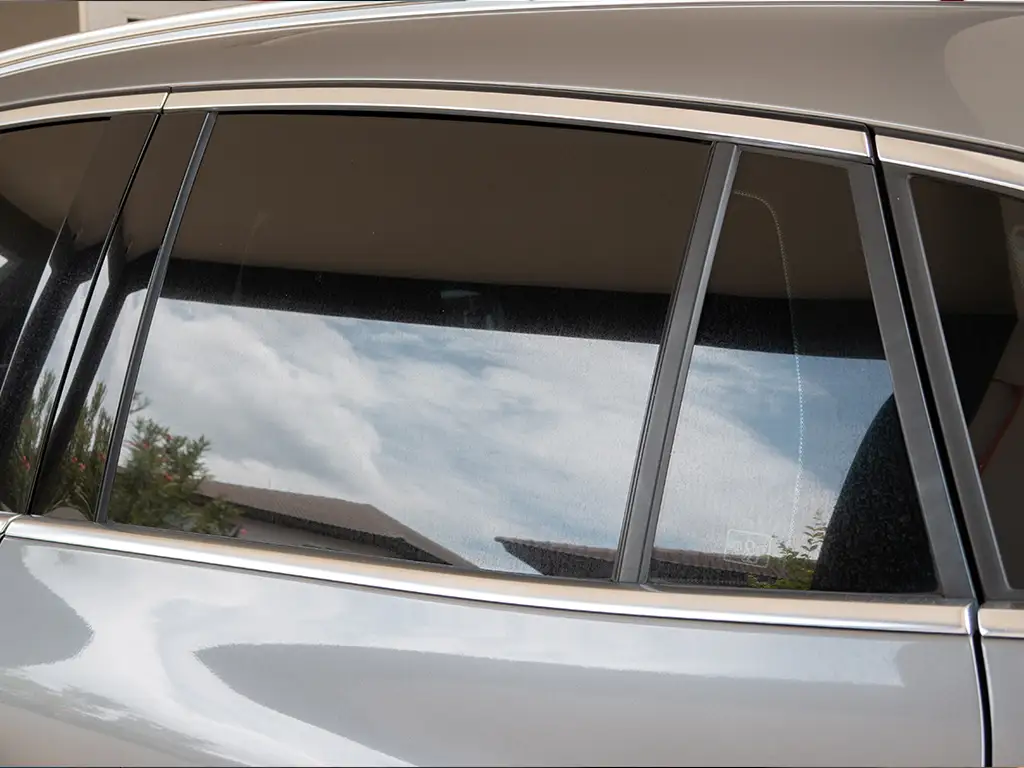
Metalized window tint contains microscopic metallic particles. These particles reflect a portion of incoming solar energy, helping reduce heat inside the vehicle.
Metalized films are known for durability and can provide stronger heat rejection than basic dyed films. Their metallic construction can also give the glass a slightly more reflective appearance.
The main drawback is potential interference with electronic signals. Depending on the film construction, metallic components may affect cell phone, GPS or radio reception.
Pros: Good heat rejection, durable construction and strong solar control.
Cons: Possible electronic signal interference and a more reflective appearance.
Best for: Drivers who prioritize heat rejection and durability and do not mind a slightly reflective finish.
3. Hybrid Window Tint
Hybrid window tint combines dyed film with metallic particles. The purpose is to balance the advantages of both technologies while reducing some of their disadvantages.
The dyed component creates the desired shade, while the metallic layer improves solar heat rejection. Hybrid films are generally less reflective than fully metalized films and may create less signal interference.
They are often positioned between basic dyed tint and more advanced carbon or ceramic options in both performance and price.
Pros: Balanced price and performance, better heat rejection than basic dyed tint and less reflectivity than many metalized films.
Cons: Still contains metallic components, and performance varies by construction.
Best for: Drivers looking for a middle-ground solution between affordability, appearance and solar performance.
4. Carbon Window Tint
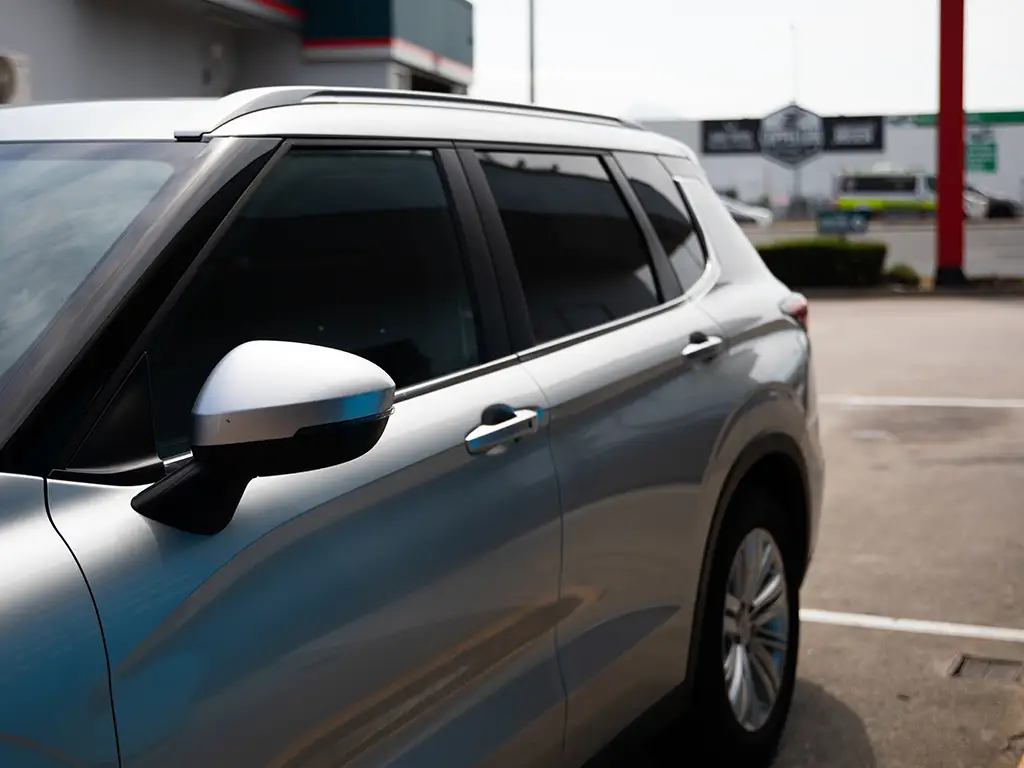
Carbon window tint uses carbon-based particles rather than metal. It is popular for its dark, matte appearance, color stability and improved heat control.
Compared with dyed tint, carbon film generally provides better heat rejection and is less likely to fade over time. Because it does not depend on metallic particles, it also avoids the signal-interference concerns associated with some metalized films.
Carbon tint is often a strong choice for drivers who want improved performance without moving to the higher price level of ceramic film.
Pros: Good heat rejection, non-reflective appearance, strong color stability and no metallic signal interference.
Cons: More expensive than dyed tint and generally below premium ceramic film in heat performance.
Best for: Drivers seeking a balance of appearance, durability, heat control and signal compatibility.
5. Ceramic Window Tint
Ceramic window tint is considered one of the premium options in automotive window film. It uses non-conductive ceramic particles to reduce solar heat and UV exposure without using conventional metallic layers.
A major advantage of ceramic film is that strong heat rejection does not necessarily require extremely dark glass. Quality ceramic films can provide excellent solar performance while maintaining good visibility.
Because the film does not rely on metal, it is also suitable for modern vehicles where cell phone, GPS and other electronic signals are important.
The main disadvantage is price. Ceramic tint is typically more expensive than dyed, metalized or carbon options.
Pros: Excellent heat rejection, high UV protection, good visibility, no metallic signal interference and long-lasting performance.
Cons: Higher price.
Best for: Drivers who prioritize heat rejection, comfort, visibility and premium performance.
6. Crystalline Window Tint

Crystalline window tint is designed for drivers who want solar and UV protection without significantly darkening the windows.
This type of film can maintain a relatively light or nearly clear appearance while still reducing heat and UV exposure. It is therefore useful for drivers who do not want a dark tint or who need to maintain higher visible light transmission.
The trade-off is privacy. Because crystalline films are lighter, they do not provide the same level of privacy as darker dyed, carbon or ceramic films.
Pros: Light appearance, good UV protection, good heat reduction and natural visibility.
Cons: Limited privacy and premium products can be expensive.
Best for: Drivers who want solar protection without a noticeably dark window appearance.
What Type of Window Tint Is Best?
There is no single best window tint for every driver. The right choice depends on budget, climate, appearance and the level of performance you expect.
Dyed tint is usually the most economical choice. Metalized and hybrid films can offer stronger solar performance. Carbon is a good option for drivers who want a dark, non-reflective appearance with improved heat rejection and no metallic signal interference.
Ceramic is generally the strongest choice when premium heat rejection and comfort are the main priorities. Crystalline film is useful when you want solar protection while keeping the glass relatively light.
The best type of window tint is therefore not necessarily the darkest or most expensive film. It is the film that best matches your vehicle and your needs.
How to Choose the Right Window Tint for Your Car
When comparing different types of window tint, do not choose by appearance alone. Consider VLT, heat rejection, UV protection, signal compatibility, durability, budget and local regulations.
Window Tint Percentage and VLT
Visible Light Transmission, or VLT, describes how much visible light passes through the window. The lower the percentage, the darker the tint.
For example, 20% tint is darker than 35% tint, and 5% tint is darker than 10% tint.
However, tint darkness and heat rejection are not the same thing. A darker film is not automatically better at controlling heat. Film technology and construction also matter.
Heat Rejection
If your main goal is keeping the cabin cooler, compare the heat-rejection performance of the specific products you are considering. Carbon and ceramic films generally provide stronger heat control than basic dyed films.
UV Protection
UV protection helps reduce exposure to ultraviolet rays and can also help protect dashboards, seats and other interior materials from long-term sun damage.
Signal Interference
If your vehicle relies heavily on GPS, cellular reception, radio or other wireless systems, consider whether the tint contains metallic particles. Some metalized films can interfere with electronic signals.
Durability and Warranty
Film quality and installation both affect long-term performance. Look for products designed to resist fading, bubbling and peeling, and review the warranty before installation.
Local Window Tint Laws
Window tint laws vary by country, state and region. Legal VLT limits may also differ between the windshield, front side windows and rear windows.
Always check the regulations that apply where the vehicle will be used before selecting a shade.
Lacuna Window Film Options
Lacuna offers automotive window film solutions for different performance and appearance needs.
Carbon & Charcoal lines are designed for drivers who prefer a timeless, non-reflective look with reliable everyday durability.
Nano Ceramic IR & Nano Ceramic ECO are developed for higher heat rejection and infrared control while maintaining clear visibility. They are aimed at drivers who prioritize interior comfort and advanced solar performance.
Titanium Jet & Air Cool series are designed for strong solar energy rejection and improved passenger comfort under intense sunlight.
The right Lacuna film should therefore be selected according to the desired appearance, heat rejection, visibility and driving conditions rather than darkness alone.
Frequently Asked Questions
What are the different types of window tinting?
The main types of car window tint are dyed, metalized, hybrid, carbon, ceramic and crystalline film. They differ in material, heat rejection, appearance, durability, price and signal compatibility.
What is the best type of car window tint?
Ceramic tint is often considered one of the highest-performing options because of its heat rejection, UV protection and non-metallic construction. However, the best choice depends on your budget and priorities.
Is ceramic tint better than carbon tint?
Ceramic tint generally offers higher heat rejection, while carbon tint provides a strong balance of appearance, performance and price. Both are popular alternatives to metallic film.
Does darker tint block more heat?
Not necessarily. A darker tint reduces visible light, but heat rejection depends on the film’s technology and construction. A lighter high-performance film can outperform a darker basic film.
Final Thoughts
The different types of car window tint offer different levels of appearance, comfort and solar performance.
Dyed film is affordable, metalized tint improves heat rejection, hybrid film combines dyed and metallic technologies, carbon provides stable non-metallic performance, ceramic offers premium heat control, and crystalline film provides protection with a lighter appearance.
Before choosing, compare the film type together with VLT, heat rejection, UV protection, signal compatibility, durability, warranty and local regulations.
Choosing the right combination of window tint technology and shade will help you find a film that looks right, performs well and suits the way you use your vehicle.
Further Reading & Resources
- Explore our collection of high-performance options on the Lacuna Window Films page.
- Read our specialized guide on the Best Window Tint for Tesla vehicles.
- Get in touch with our team directly through the Lacuna Contact page for distributor applications or inquiries.