Two window films can look almost identical from the outside and perform very differently once the sun hits the glass. That is because window tint darkness and window tint performance are not the same thing.
Ceramic window tint is designed to provide strong solar heat control without relying on metallic components. It uses microscopic ceramic particles within the film construction to manage infrared energy, reduce glare and block UV radiation while maintaining clear visibility and compatibility with electronic signals.
For drivers comparing premium automotive films, the important question is not simply whether a tint is ceramic. It is how that particular ceramic film performs.
What Is Ceramic Window Tint?
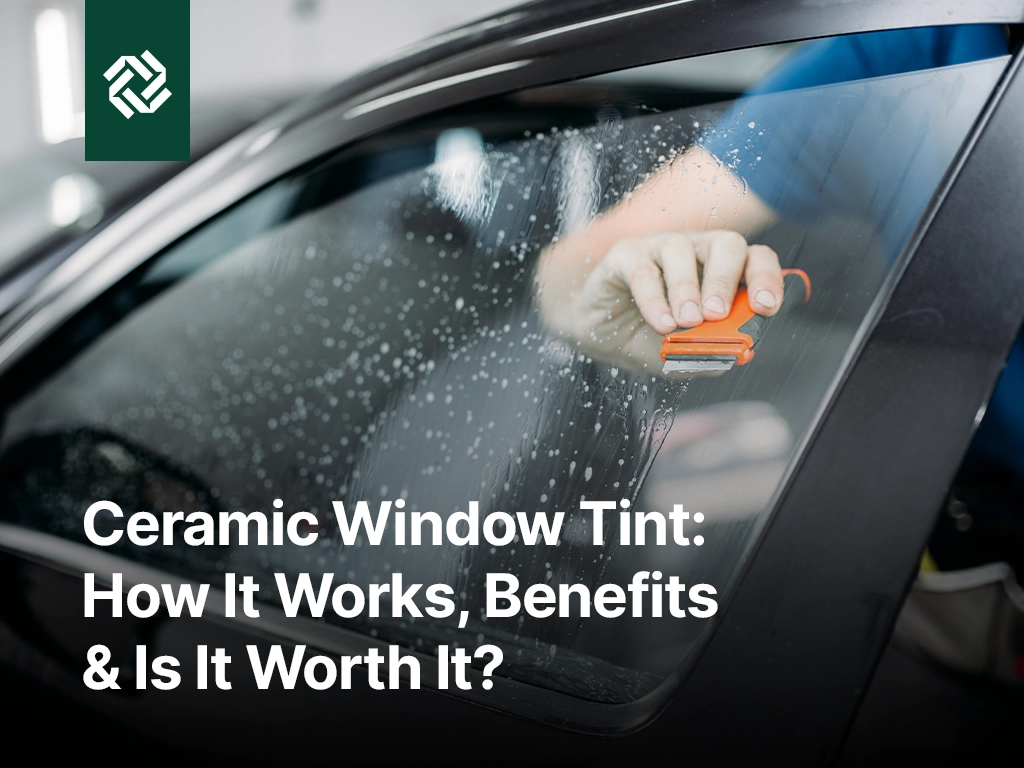
Ceramic window tint is an automotive window film that uses very small, non-metallic ceramic particles as part of its construction.
Traditional dyed films rely largely on dye to create shade, while metalized films incorporate metallic components for solar control. Ceramic films take a different approach, using advanced ceramic materials to manage solar energy without creating a metallic appearance or relying on metal for performance.
This gives ceramic tint several practical advantages: strong heat rejection, UV protection, low reflectivity, stable appearance and compatibility with the electronic systems found in modern vehicles.
The term nano ceramic window tint generally refers to ceramic films using extremely small ceramic particles engineered into the film structure.
How Does Ceramic Window Tint Work?

Sunlight reaching your vehicle contains visible light, ultraviolet radiation and infrared energy.
A ceramic film is engineered to control these parts of the solar spectrum differently.
Visible Light Transmission, or VLT, determines how much visible light passes through the filmed glass and therefore has a major effect on how light or dark the window appears.
Heat performance is different. Ceramic particles can manage a substantial amount of infrared and overall solar energy even when the film itself is relatively light.
This is why a darker tint is not automatically a better heat-rejecting tint.
A high-performance ceramic film with a lighter appearance can provide better solar control than a darker film built primarily for appearance.
What Are the Benefits of Ceramic Window Tint?
The main reason to choose ceramic film is performance without many of the compromises associated with older film technologies.
Heat Rejection
Heat control is one of the strongest reasons drivers consider ceramic tint.
Rather than judging performance by darkness alone, look at the film’s published solar specifications. A quality ceramic film can substantially reduce the amount of solar energy transmitted through automotive glass.
This can make the cabin more comfortable in direct sunlight, particularly for vehicles that spend long periods outside or are driven in hot climates.
UV Protection
High-quality ceramic films can reject the vast majority of ultraviolet radiation passing through filmed glass.
Reducing UV exposure helps protect interior materials such as dashboards, leather, plastics and upholstery from long-term sun exposure.
No Metallic Signal Interference
Ceramic films are non-metallic.
That matters in modern vehicles that rely on mobile connectivity, GPS, satellite radio and other wireless systems. A properly engineered non-metallic ceramic film can provide solar performance without the signal concerns associated with some metallic film constructions.
Visibility and Low Reflectivity
Premium ceramic films can combine heat rejection with relatively low visible reflectivity.
This provides a cleaner appearance without requiring a highly reflective or mirror-like finish.
Glare Reduction
Reducing visible light also reduces glare. The amount of glare reduction will vary with the selected VLT, so darker ceramic films generally provide greater glare control than lighter versions of the same product family.
Ceramic Tint Heat Rejection: Do Not Look at IR Alone

This is where ceramic window tint comparisons often become confusing.
You may see one film advertised with “90% IR rejection” and another with a lower number and assume the first film must reject more total heat.
That comparison can be misleading.
Three specifications are especially useful when reading a window film data sheet:
VLT – Visible Light Transmission
The percentage of visible light passing through filmed glass. A higher number means a lighter appearance.
IR Rejection – Infrared Rejection
A measurement of infrared energy rejection. The result depends on the wavelength range and test method being used.
TSER – Total Solar Energy Rejected
The percentage of total solar energy rejected by the filmed glass. It provides a broader view of solar heat performance than looking at a single infrared figure alone.
For that reason, a large IR number should not be used by itself to decide which ceramic film performs better.
When comparing products, check VLT, TSER and the stated IR measurement together.
Does Ceramic Tint Have to Be Dark to Reject Heat?
No.
One of the most useful characteristics of advanced ceramic technology is that strong solar performance does not necessarily require extremely dark windows.
Consider published specifications from Lacuna’s Nano Ceramic IR range:
| Film | VLT | TSER | IR Rejection | UV Rejection |
| Nano Ceramic IR 05 | 7% | 80% | 90% | ≥99% |
| Nano Ceramic IR 20 | 19% | 76% | 86% | ≥99% |
| Nano Ceramic IR 35 | 34% | 70% | 83% | ≥99% |
| Nano Ceramic IR 50 | 50% | 62% | 78% | ≥99% |
The important point is not that every shade performs identically. It does not.
The point is that a lighter ceramic film can still provide substantial solar performance. A 50% VLT ceramic film, for example, should not be judged against a darker conventional film simply by looking at which window appears darker.
Shade and technology are separate decisions.
What Makes a Good Ceramic Window Tint?
The word “ceramic” on its own does not tell you enough about a film.
Two ceramic products can have different solar performance, optical characteristics, warranties and long-term durability.
Before choosing a ceramic tint, look for published specifications rather than relying only on marketing claims.
Start with TSER and VLT. Review the IR measurement and understand how it is defined. Check UV rejection, visible light reflectance and warranty coverage as well.
Optical quality also matters. Automotive glass is something you look through every time you drive, so excessive haze, distortion or an unwanted reflective appearance can be just as important as a performance number on a data sheet.
Finally, consider installation quality. Even a high-performance film needs correct surface preparation and professional installation to produce a clean result.
Is Ceramic Window Tint Worth It?
For many drivers, yes—but not everyone needs the highest-performing film available.
Ceramic tint makes the most sense when heat rejection, visibility, UV protection, signal compatibility and long-term performance matter more than obtaining the lowest possible installation price.
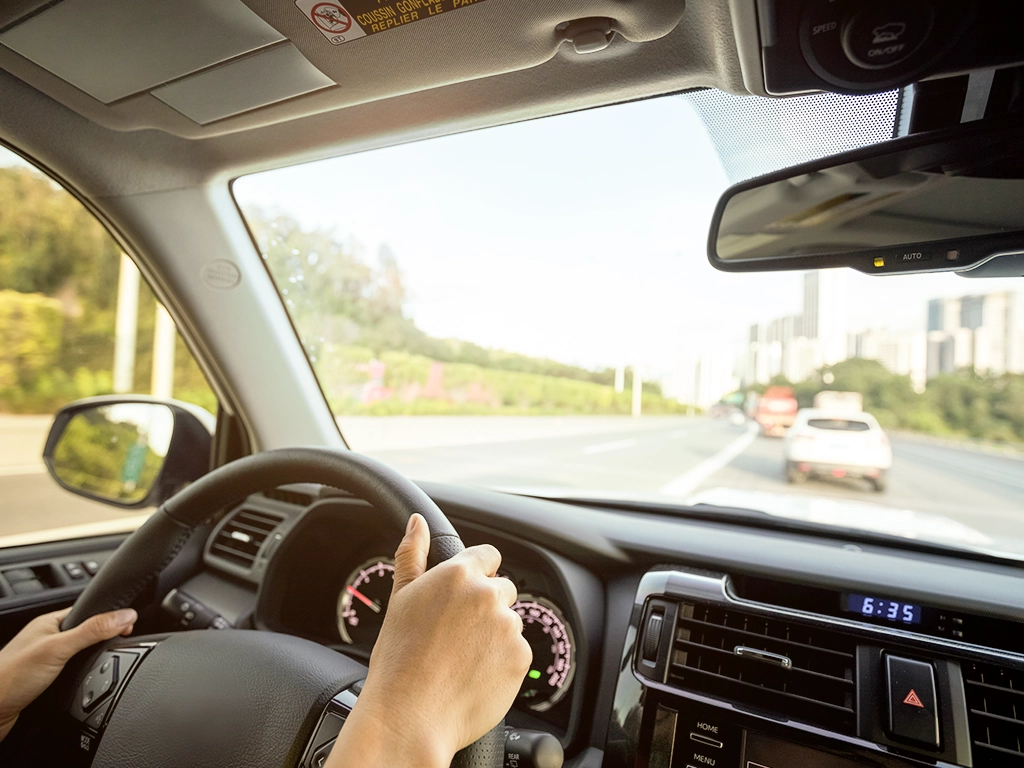
It is particularly relevant for vehicles that spend significant time in direct sunlight, drivers in warmer climates and owners who plan to keep their vehicle for several years.
On the other hand, if your only goal is to create a darker appearance or add basic privacy at the lowest cost, a less advanced film may meet your needs.
That is why the decision should begin with what you expect the film to do rather than automatically choosing the most expensive option.
For a direct comparison between ceramic, carbon and dyed technologies, see our Ceramic vs. Carbon vs. Dyed Window Tint guide.
Are There Any Downsides to Ceramic Tint?
The clearest disadvantage is cost.
Ceramic films generally cost more than basic dyed alternatives because of their materials and manufacturing technology.
There is also a wide quality range within products marketed as ceramic. Paying for a “ceramic” label does not automatically guarantee high heat rejection or excellent optical quality.
This is another reason to ask for actual performance specifications before choosing a product.
The selected VLT also needs to suit both your driving needs and applicable regulations. Ceramic technology can provide strong heat control at lighter shades, so there is usually no reason to choose an unnecessarily dark film purely for heat rejection.
For a detailed explanation of tint percentages, see our Window Tint Percentage Guide covering 5%, 20%, 35%, 50% and 70% VLT.
Lacuna Nano Ceramic Window Films
Lacuna offers two nano-ceramic automotive window film ranges designed for different performance requirements.
Nano Ceramic IR
Nano Ceramic IR is the higher-performance ceramic range, available in 05, 20, 35 and 50 shades.
Published specifications reach up to 80% TSER and 90% IR rejection, depending on the selected film, with ≥99% UV rejection across the range. Nano Ceramic IR carries a 15-year warranty.
Its different VLT options allow drivers to select the desired level of visible light while retaining high solar-control performance.
Nano Ceramic ECO
Nano Ceramic ECO provides another nano-ceramic option with a wider range of available shades, including 05, 15, 20, 35, 50 and 70.
The range reaches up to 75% TSER and 84% IR rejection, with ≥99% UV rejection and a 10-year warranty.
The 70 version is particularly useful for illustrating the difference between darkness and performance: its published VLT is 75%, while TSER remains 50%.
Rather than choosing between these products solely by shade, the better approach is to compare the level of solar performance, visibility and warranty that fits the vehicle and its intended use.
How Should You Choose a Ceramic Window Tint?
Start with the problem you actually want to solve.
If cabin heat is the priority, compare TSER and the manufacturer’s infrared data. If you want a lighter appearance, look at higher-VLT options without assuming that lighter automatically means low performance.
If privacy and glare reduction matter more, a darker VLT may make more sense.
Then consider UV rejection, optical quality, warranty and installation.
A good ceramic tint should not need exaggerated claims to prove its value. The performance data should explain what the film is designed to do.
Final Thoughts
Ceramic window tint is more than a darker layer on automotive glass.
Its advantage comes from the ability to manage solar energy using non-metallic ceramic technology, allowing manufacturers to combine heat rejection, UV protection, visibility and signal compatibility within the same film.
But not every ceramic tint performs the same way.
Instead of choosing based only on darkness or a headline IR percentage, compare the actual specifications: VLT, TSER, infrared rejection, UV rejection, visible reflectivity and warranty.
That is the difference between simply buying a film labeled “ceramic” and choosing the right ceramic window tint for your vehicle.