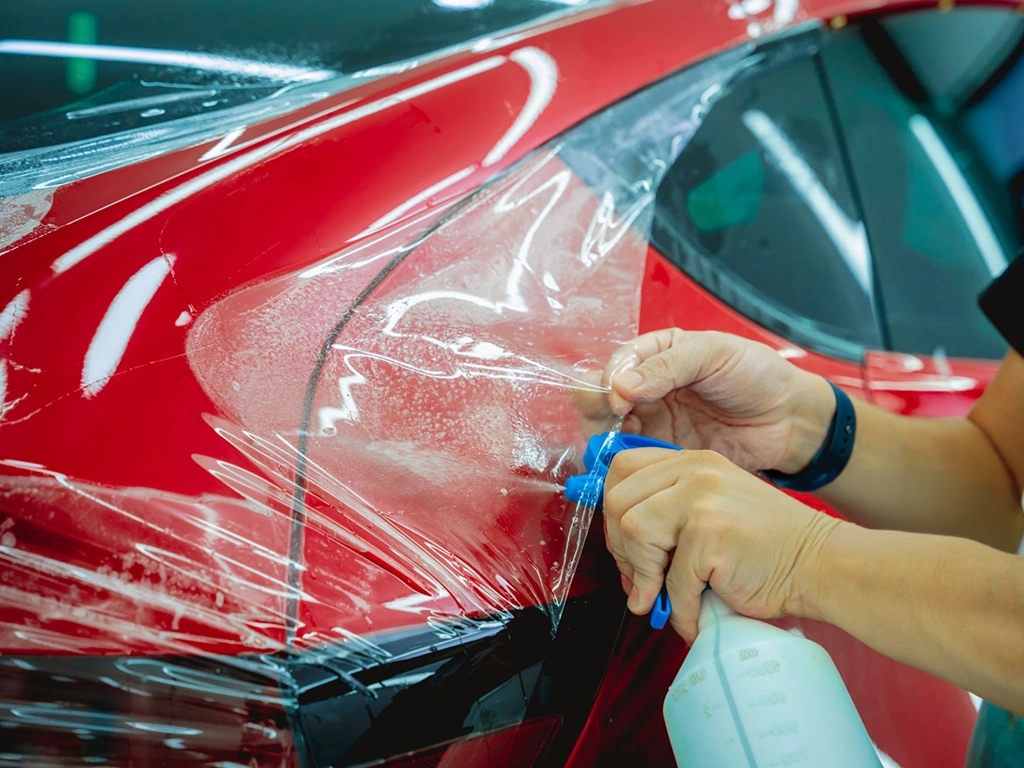
If you have ever driven a new car off the lot, you know the feeling of wanting to keep that showroom shine forever. However, the road has other plans. Between stone chips, road debris, and environmental contaminants, your vehicle’s exterior is under constant attack. If you’ve noticed small scratches or swirl marks on your hood, you’ve likely started searching for a professional solution.
Most car enthusiasts ask the same question: What is PPF on a car and is it actually worth the investment?. At Lacuna, we view paint protection film (PPF) not just as an accessory, but as a performance-driven shield that preserves your vehicle’s long-term value.
What is Paint Protection Film (PPF)?
Paint Protection Film (PPF), often referred to as a “clear bra,” is a high-quality, thermoplastic polyurethane (TPU) film applied to the painted surfaces of a vehicle. Unlike window tint which is applied internally, PPF is an external layer designed to absorb impact and resist chemicals.
High-performance films, like those developed through Lacuna’s years of experience, offer a “self-healing” property. This means that under heat (sunlight or warm water), minor scratches and swirl marks on the film disappear, keeping the surface looking brand new.
What Does PPF Protect Against?
One of the biggest misconceptions is that PPF is only for luxury vehicles. In reality, it protects against everyday damage that affects any car:
-Rock chips and road debris
-Surface scratches and swirl marks
-UV exposure and paint fading
-Bird droppings, tree sap, and chemical stains
-Light abrasions from washing or daily use
-Unlike coatings, PPF acts as a physical barrier. It absorbs damage before it reaches your paint.
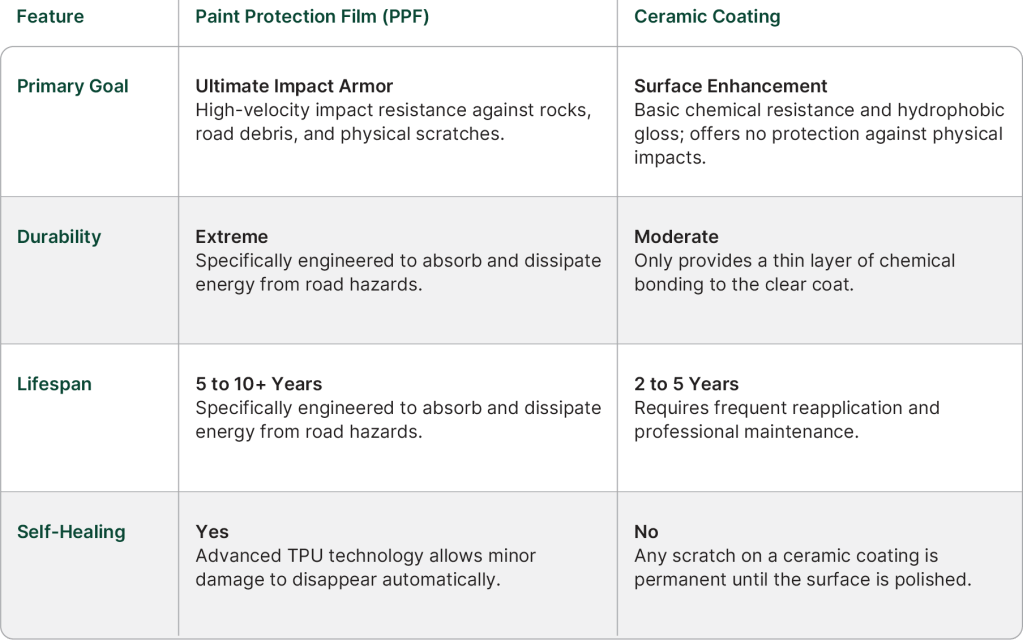
PPF vs. Ceramic Coating: Which is Better for Your Car?
One of the most frequent debates in the USA automotive market and globally is choosing between PPF and ceramic coating. While both provide protection, they serve different primary functions
How Long Does PPF Last?
The lifespan of PPF depends on the quality of the film, environmental conditions, and the precision of the installation. In general, most modern paint protection films are designed to perform reliably for several years, with many high-quality systems maintaining their clarity and protective properties well beyond a decade when properly maintained.
It is important to note that durability is not determined by the material alone. Professional installation plays a critical role in long-term performance. Proper application ensures consistent adhesion, optical clarity, and sustained protection over time.
The Evolution of Film: Types of PPF
Not all films offer the same level of performance. Depending on your aesthetic goals, you can choose from:
- Clear PPF: The standard invisible shield that maintains the original paint color.
- Matte / Stealth PPF: Transforms glossy paint into a sleek satin finish while protecting it.
- Color Changing PPF: A newer innovation that provides the protection of PPF with the look of a vinyl wrap.
Why Professional Installation Matters
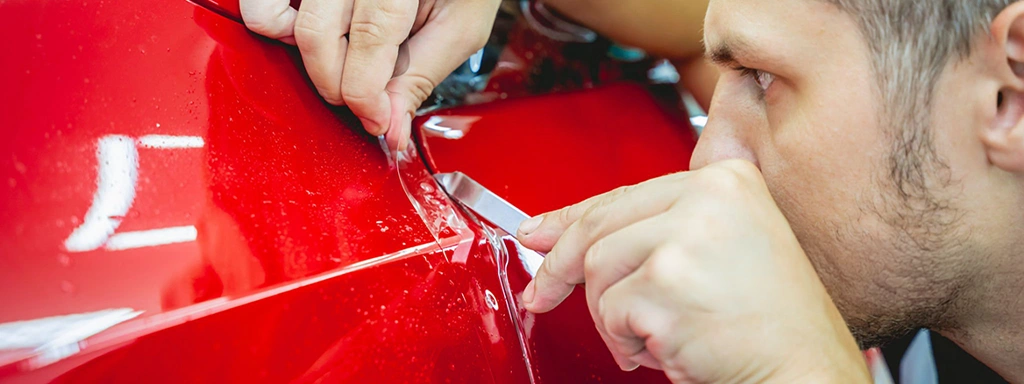
The lifespan and effectiveness of auto PPF depend heavily on the quality of the installation. Professional installers ensure the film is seamlessly tucked around edges to prevent peeling and bubbles.
In summary, paint protection film is the ultimate defense for anyone serious about their vehicle’s condition. Whether you are navigating the highways of Los Angeles or the narrow streets of Europe, PPF provides a technical solution that keeps your car looking pristine.
Ready to protect your vehicle from the abrasive effects of the road? Explore our Lacuna Professional PPF Solutions and guarantee your vehicle’s brilliance.
If you found this guide helpful, consider sharing it with others who may be looking for the same answers.