
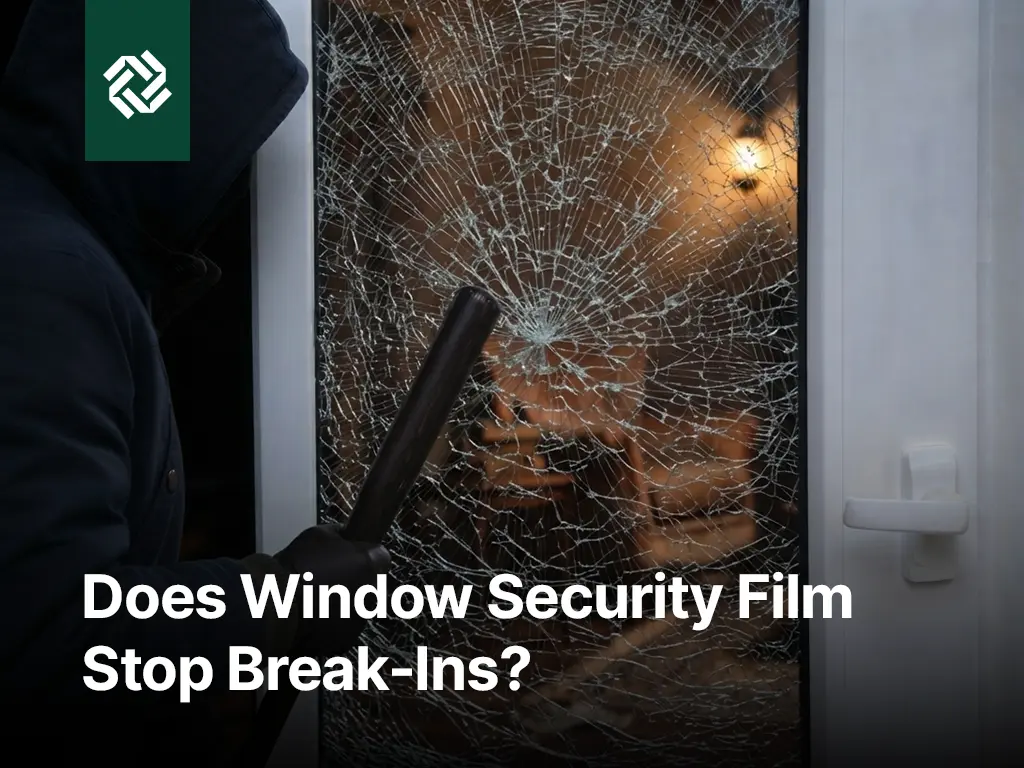
Windows and glass doors are often among the most vulnerable points of a building. Breaking standard glass can create an opening within seconds, which is why homes, storefronts, offices and other commercial properties increasingly use window security film as an additional layer of protection.
But does window security film actually stop a break-in?
The most accurate answer is this: security film does not make glass impossible to break. Instead, it helps hold broken glass together and makes it more difficult to create an opening through the window.
This can slow down a forced-entry attempt and increase the amount of effort required to get through the glass. How well the system performs depends on the film, existing glass, window frame, installation and, in more demanding applications, the attachment system used around the edges.
What Is Window Security Film?

Window security film is a strong, multi-layer polyester film installed directly onto existing glass.
Unlike conventional solar-control window films, which mainly focus on heat, glare or UV protection, security films are designed primarily to improve glass retention and resistance to impact.
The key point is that the glass can still break.
When untreated glass is struck with enough force, the pane may fracture and pieces of glass can fall away from the opening. Security film changes this behavior by helping the fractured pieces remain bonded to the film.
Instead of immediately creating an open space, the broken glass can remain together as a flexible but resistant barrier.
This glass-retention effect is the basic principle behind security window film.
Does Window Security Film Stop Break-Ins?
Security film should be understood as a forced-entry delay measure, not as a guarantee that an intruder can never get through a window.
With standard untreated glass, a strong impact may quickly break the pane and create access to the building.
When security film is properly installed, the glass may still crack, but the film continues holding the broken pieces together. An intruder then has to continue working against both the fractured glass and the film before a usable opening can be created.
That additional resistance can be particularly important during smash-and-grab or forced-entry attempts where speed is critical.
However, there is no universal amount of time that every security film will resist an attack.
Performance depends on several factors, including:
- Type and thickness of the existing glass
- Security film construction
- Film thickness
- Adhesive system
- Size of the window
- Strength of the window frame
- Film-to-frame attachment
- Tools and attack method being used
For that reason, claims such as “this film stops burglars for exactly five minutes” should only be made when they are supported by testing of the specific glazing system being used.
What Happens to the Glass When It Is Hit?
One of the most common misunderstandings about security film is that it prevents glass from breaking.
That is not its primary function.
Under sufficient force, the glass can fracture. The film and adhesive help retain those broken pieces, preventing them from immediately separating and falling away.
For security applications, this means the attacker still has a physical barrier in front of them even after the glass has cracked.
For building occupants, glass retention can also reduce the amount of loose glass fragments entering the interior after certain types of breakage.
A more accurate way to describe the technology is therefore:
Security film does not make glass unbreakable. It helps the broken glass remain together.
Why Does the Window Frame Matter?
Security protection does not end with the film.
The window frame plays an important role because a filmed pane that stays together can still be pushed out of an unsuitable or weak frame under sufficient force.
This is why higher-level security applications may use a film-to-frame attachment system.
An attachment system connects the filmed glass more securely to the surrounding frame, helping the complete glazing assembly remain in place after impact.
A security glazing system can therefore be thought of as four connected parts:
Glass → Security Film → Attachment → Frame
This distinction is especially important when evaluating products for forced-entry applications.
Looking only at the thickness of the film does not tell you how the complete window system will behave under attack.
Is Thicker Security Film Always Better?
Security films are available in different thicknesses, usually expressed in mil.
Thicker and multi-layer films can provide greater material strength and different tear characteristics, but thickness alone does not define security performance.
A thicker film applied to unsuitable glass or a weak frame may not necessarily provide a better complete system than a properly engineered installation using the correct glass, film and attachment method.
This is why security-film specifications should begin with the risk and application rather than simply choosing the thickest available product.
Lacuna’s Safety & Security Film range includes several thickness options for different architectural requirements:
| Lacuna Series | Available Thickness |
| Clear Safety | 4, 7, 11, 15, 21 Mil |
| Natural Cool | 4, 7 Mil |
| Silver Safety | 4, 7 Mil |
| Exterior Clear Safety | 7 Mil |
The appropriate specification depends on the glass, frame, location and level of protection required.
Where Is Window Security Film Commonly Used?
Security film can be useful wherever accessible glass represents a potential entry point.
Common applications include:
- Ground-floor windows
- Retail storefronts
- Glass entrance doors
- Sidelights beside doors
- Sliding glass doors
- Offices
- Commercial buildings
- Schools and public facilities
- Locations displaying valuable goods
Not every window necessarily requires the same level of protection.
A street-level storefront exposed directly to the public has a very different risk profile from a window several floors above ground level.
For this reason, the best approach is to identify vulnerable glazing first and then determine the appropriate security system for those areas.
Can Window Security Film Help Against Smash-and-Grab Theft?
Yes, this is one of the situations where glass-retention technology can be particularly useful.
Smash-and-grab theft relies heavily on speed. The attacker wants to break the glazing, create an opening and gain access as quickly as possible.
Security film makes this process more difficult because breaking the glass does not necessarily mean the opening is immediately clear.
The fractured glass remains attached to the film, which can require additional impacts and effort before access is possible.
Security window film should still be considered one component of a broader security strategy. Depending on the property, this may also include alarms, cameras, locks, lighting and other physical security measures.
Does Security Film Make a Window Shatterproof?
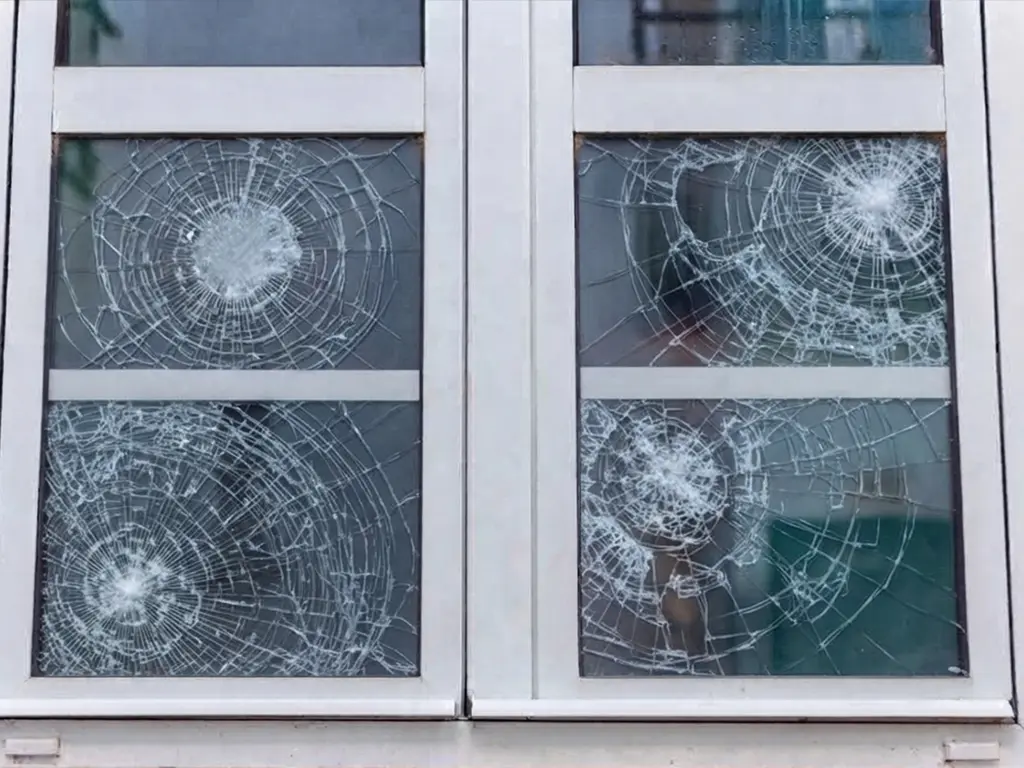
No.
The term “shatterproof window film” is commonly used in marketing, but it can create unrealistic expectations.
Security film does not guarantee that the glass will never shatter.
Its purpose is to help retain shattered glass after breakage.
The same applies to terms such as “burglar-proof glass.”
Security film can improve resistance and make forced entry more difficult, but it should not be presented as making a standard window completely impossible to penetrate.
Is Window Security Film Bulletproof?
No. Standard window security film should not be confused with ballistic-resistant glazing.
Security film, safety glazing and bullet-resistant systems are different categories of protection.
Applying security film to standard architectural glass does not automatically turn that glass into a certified ballistic system.
If ballistic protection is required, the complete glazing system must be specifically designed and tested for that threat.
This is another reason why security products should always be matched to the actual risk rather than grouped together under a general “security glass” label.
How Is Security Window Film Tested?
Security glazing can be tested for different threats, including accidental impact, forced entry and other specific hazards.
The important point is that one type of test does not automatically prove performance against every threat.
A product tested for glass retention after accidental impact should not automatically be assumed to provide the same performance against a sustained forced-entry attack.
Likewise, a forced-entry test does not mean that the glazing is ballistic resistant.
For a serious security project, the useful question is not simply:
“Has this film been tested?”
The better question is:
“Has this film and glazing system been tested for the type of threat we are trying to address?”
That distinction makes security specifications much more meaningful.
What Should You Look for When Choosing Window Security Film?
Start with the problem you are trying to solve.
If the objective is forced-entry protection, consider the complete glazing system rather than focusing only on one product specification.
Existing Glass
Different glass types and thicknesses behave differently under impact.
Security Film
Film thickness, construction, tensile properties and adhesive system all influence performance.
Window Frame
The strength and condition of the frame can affect whether the filmed glass remains in place.
Attachment System
For more demanding security applications, connecting the security film to the frame can significantly change the behavior of the complete system.
Relevant Testing
Ask for test documentation related to the intended application rather than relying on general terms such as “heavy duty” or “high security.”
Professional Installation
Correct surface preparation, installation and edge treatment are important parts of the finished security system.
Lacuna Window Security Film
Lacuna offers Safety & Security Window Films for different architectural glazing requirements.
The range includes Clear Safety films from 4 to 21 mil, along with Natural Cool, Silver Safety and Exterior Clear Safety options.
This allows security film to be selected according to factors such as glass location, appearance, solar-control requirements and the intended level of protection.
For forced-entry applications, film thickness should not be considered independently. Existing glass, frame design, installation method and any required attachment system should also be evaluated.
The objective is to build the appropriate glazing system for the project rather than applying the same solution to every window.
So, Does Window Security Film Really Work?
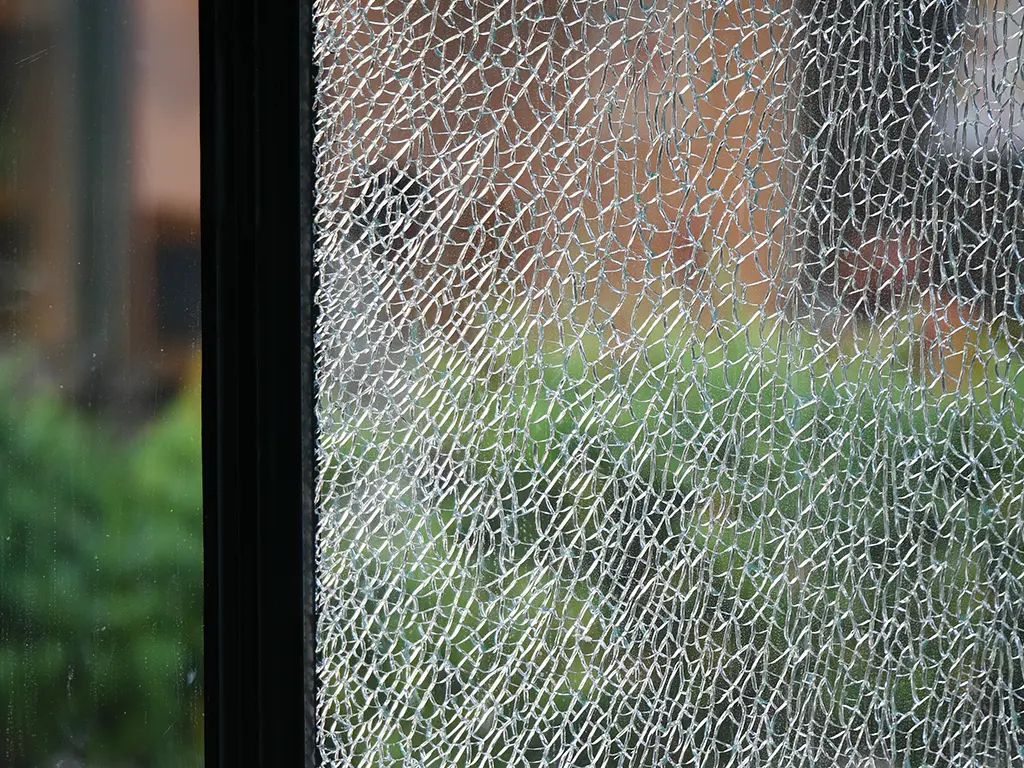
Yes, when its purpose is understood correctly.
Window security film helps keep fractured glass together and can make a quick forced-entry attempt more difficult. When a suitable attachment system is used, the filmed glass can also be more securely connected to the surrounding frame.
What security film does not do is make ordinary glass impossible to break or guarantee that no intruder will ever gain access.
A properly designed security-film project starts by identifying the threat, evaluating the existing glazing and frame, selecting the appropriate film and determining whether additional attachment is required.
The goal is not to claim that the window cannot break.
The goal is to make breaking the window much less useful to the person trying to get through it.
Fortify Your Property Today: Get in Touch With Our Specialists
Upgrading your perimeter glazing with professional window security film is a proven, cost-effective method to secure your premises without altering architectural charm. While no barrier is 100% impenetrable, the critical minutes gained by Lacuna’s advanced impact laminates make all the difference in thwarting burglaries and saving lives.
Do you have specific architectural questions, need custom thickness recommendations, or want to review laboratory testing certifications for your project?
Our engineering and technical support team is ready to assist you:
- Official Inquiries & Support Form: Visit our contact portal at https://lacuna-usa.com/contact/ to submit project details or request samples.
- Direct Email Contact: For rapid consultations, architectural submittals, feel free to email our team directly at info@lacuna-usa.com. We are always here to help you configure the right security defense for your property!